Meet the inaugural winner: Dr. Alexandra “Bili” Newman
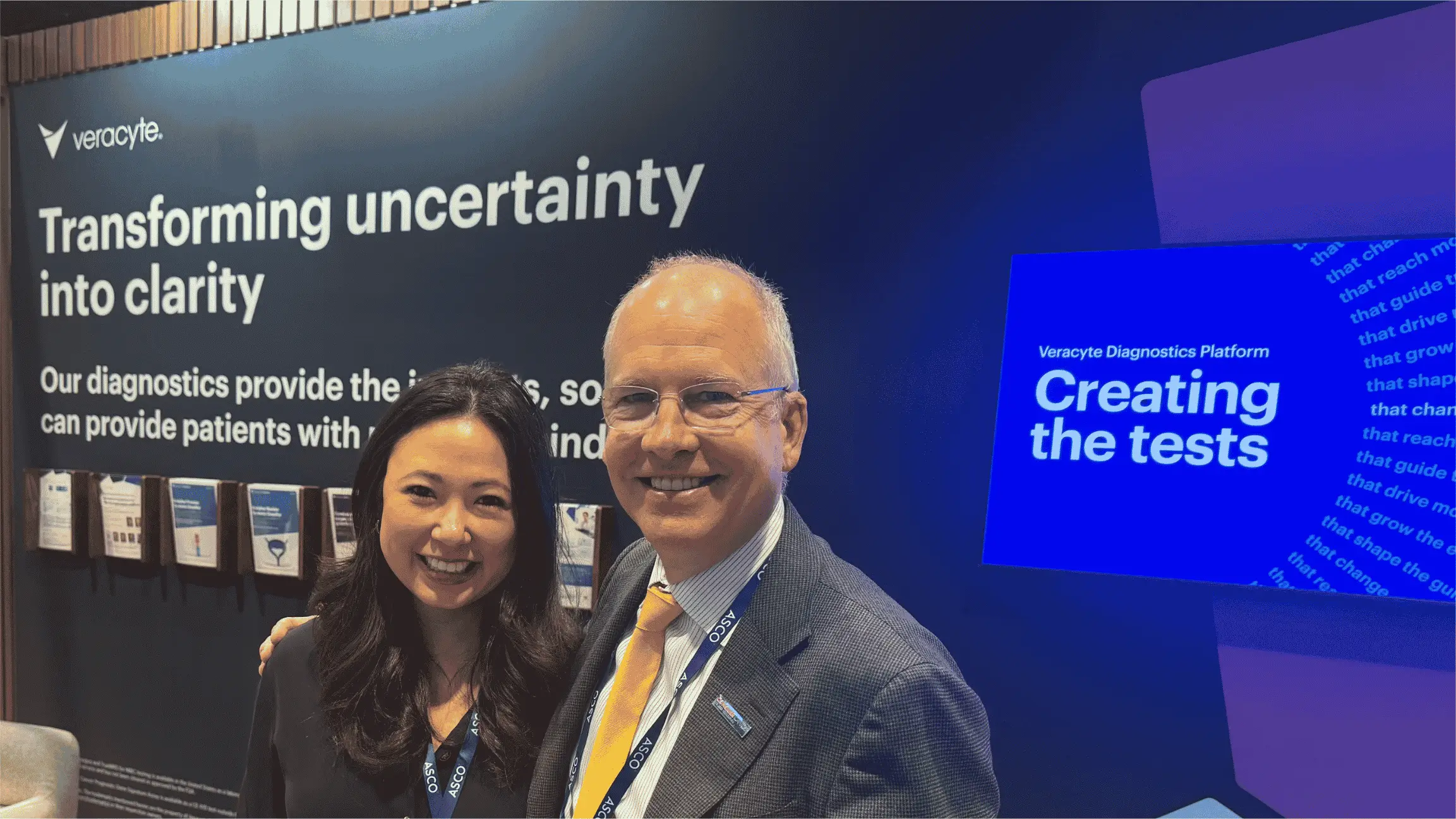
Veracyte is proud to support Conquer Cancer, the ASCO Foundation, by endowing the Conquer Cancer-Veracyte Endowed Young Investigator Award in Breast Cancer Genomics. The award, which will be given each year, provides funding to promising investigators to encourage and promote quality research in clinical oncology. We were thrilled recently to speak with Dr. Alexandra “Bili” Newman, winner of the inaugural award.
Below is a summary of our interview with Dr. Newman about her Young Investigator Award project, “Multi-omic PTEN Assessment to Optimize PI3K/AKT Inhibitor Selection in Advanced Breast Cancer”. Her responses have been edited for length and clarity.
Veracyte Team: First, can you tell us a bit about yourself?
Dr. Newman: I’m currently finishing up my second year of a three-year fellowship in Hematology-Oncology at MD Anderson Cancer Center in Houston. My clinical and research work here focuses on breast cancer.
After my fellowship, my goal is to become a junior faculty member at a large cancer institution. I’d like to develop clinical trials and be involved in larger breast cancer trials, in addition to taking care of patients in the clinic.
Veracyte Team: What is the focus of your Young Investigator Award project?
Dr. Newman: There’s a genetic pathway – known as PI3K – which is commonly mutated in many patients with breast cancer. There are currently several FDA-approved drugs that focus on this pathway by either targeting that gene mutation or by blocking a protein downstream in the pathway called AKT. These drugs are used in patients whose breast cancer has spread and for whom genetic testing shows they have the gene mutation. Currently, physicians primarily decide which drug to give these patients based on the drug’s side-effect profile. It’s really a “dealer’s choice” situation.
There’s another important factor in this pathway, though, which could potentially play a role in treatment selection. The PTEN protein acts like a brake to prevent cancer cells from growing out of control. In some of these patients, it may be missing or inactive. Research suggests that patients with missing PTEN protein may respond differently to the different drugs. Currently, however, missing PTEN is not part of testing for patients being considered for these drugs.
Our research has two parts. First, we’re testing for the PTEN protein on tumors from patients who’ve already received the available drugs. We want to see if patients with missing PTEN protein responded differently to drugs targeting the PI3K mutation versus AKT inhibitors. We’re also evaluating new patients who don’t have PI3K mutations, but who may have missing PTEN through other pathways. We aim to determine if these patients could also potentially benefit from the AKT inhibitor.
Veracyte Team: Why is this research important for patients?
Dr. Newman: We want to know if we should be testing patients with metastatic breast cancer for protein expression, in addition to genetic changes. This could potentially help physicians select the most appropriate drug for each patient, enabling improved outcomes while reducing unnecessary side effects.
It’s also important to remember that we’re looking at this issue in patients with advanced breast cancer. They have a finite number of treatment options available to them. So, opening up a new treatment avenue that could potentially benefit them could be incredibly meaningful.
Veracyte Team: What is the significance of the Young Investigator Award to you professionally?
Dr. Newman: In the near-term, my hope is that we can obtain preliminary data that enables us to show a gap between current care and what is possible with more-robust testing. Armed with this data, we can hopefully apply for additional funding to expand upon the research.
The award is also extremely important for my longer-term professional goals. I’ve benefited from wonderful mentorship in my academic career and a lot of research projects have come through my mentors. Part of transitioning into becoming an independent researcher is to secure funding for your own research. But this is hard to do when you’re straight out of a fellowship because most of the grants go to established researchers. I see the Young Investigator Award as a huge entrée into bigger opportunities down the road.